

A lot of California homeowners hit the same wall at the same moment. The lender needs proof of coverage, the closing date is getting close, and three insurance quotes are open on the screen with different premiums, different deductibles, different coverage limits, and fine print that doesn't look remotely comparable.
That stress is real, especially when the property sits anywhere near brush, canyon land, or a wildfire exposure zone. In California, comparing homeowners insurance isn't just a shopping exercise. It's a protection decision under changing carrier rules, fire restrictions, and occasional FAIR Plan complications. The right policy can save money over time. The wrong one can look cheaper right up until a claim.
Table of Contents
- The Starting Line for Comparing Insurance Quotes
- Establish Your Home's True Rebuilding Cost
- How to Decode Your Home Insurance Quote Details
- Navigating the California Wildfire Insurance Challenge
- Your Side-by-Side Quote Comparison Framework
- From Comparison to Confidence and Getting Covered
The Starting Line for Comparing Insurance Quotes
Many individuals begin by comparing the premium because it's the easiest number to spot. That's understandable, but it's also where trouble starts. Home insurance quotes often look similar on the surface while protecting very different things underneath.
The first rule is simple. Get at least three distinct quotes. The Insurance Information Institute recommends that approach, and it matters because one quote alone doesn't show the full market for a specific home. It also doesn't show whether the lower premium comes from better pricing or thinner protection. As noted in Allstate's guide to comparing home insurance, a quote that appears $200 cheaper annually might be missing windstorm coverage or using a lower dwelling limit, and shopping annually instead of auto-renewing can save 20% to 40% compared with legacy policyholders.
California makes this harder than it should be. One carrier may write a standard homeowners policy with strong fire protection. Another may limit wildfire-related coverage. A third may decline the home entirely unless coverage is split across multiple policies. That means the primary job isn't just learning how to compare home insurance quotes. It's learning how to compare quotes when the products themselves are structurally different.
Practical rule: A cheap quote only counts as a bargain if the deductible, dwelling limit, and major peril coverage are lined up the same way across every option.
That's where many first-time buyers get tripped up. They compare monthly cost, but they don't normalize the quote inputs. If one policy uses a higher deductible and another uses a lower dwelling limit, the premiums won't mean much.
A clean comparison starts with a short checklist:
- Same deductible: Keep the deductible identical across every quote when possible.
- Same dwelling limit target: Use one rebuilding-cost baseline for all carriers.
- Same named protections: Check whether fire, windstorm, and other major perils are included or carved out.
- Same endorsements where relevant: If one quote includes added protection, account for that before comparing the premium.
That mindset changes the goal. The target isn't the lowest number on the page. The target is the best value for the level of protection the home needs.
Establish Your Home's True Rebuilding Cost
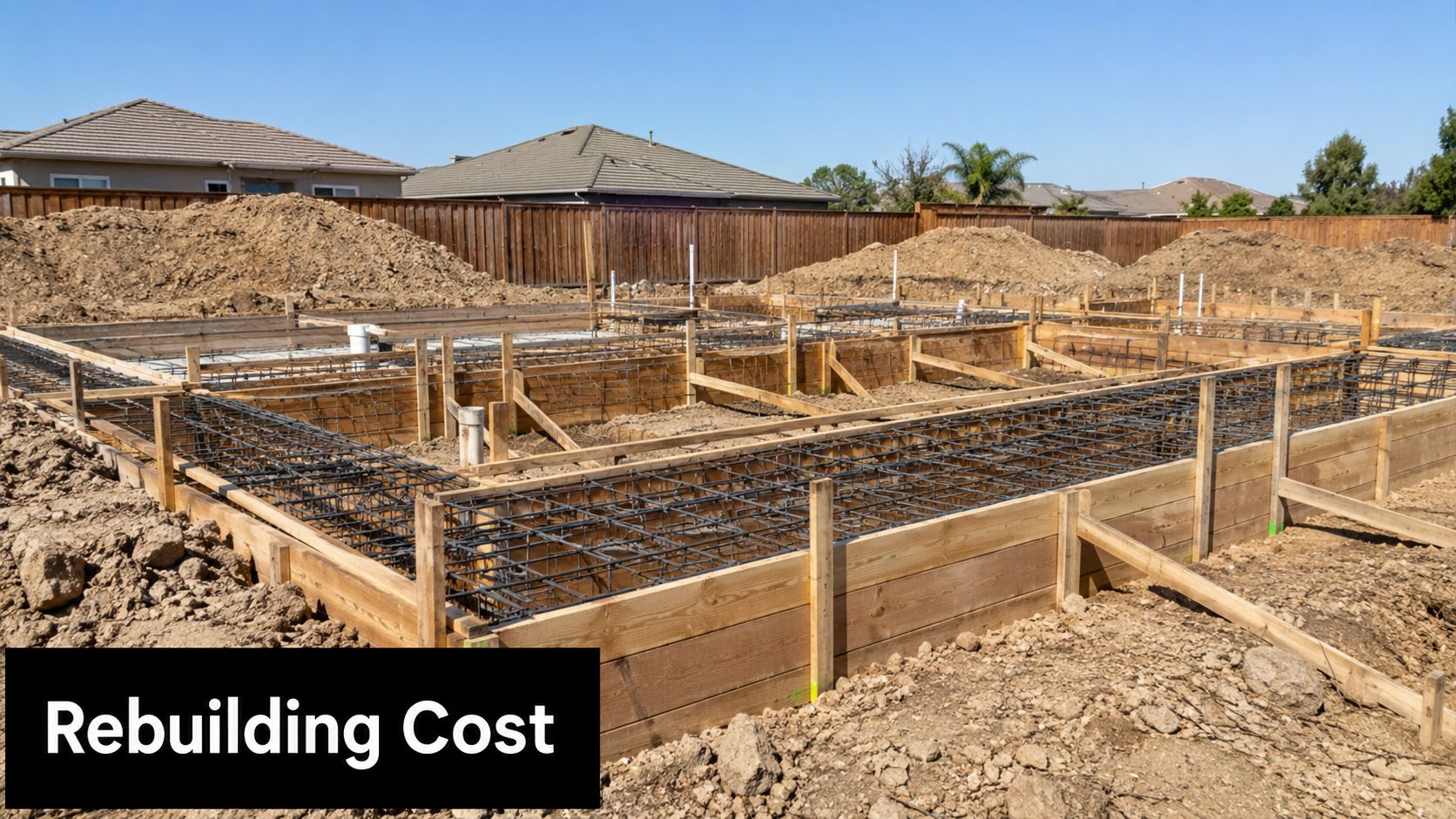
A lot of first-time California buyers get tripped up here. They use the purchase price, Zillow estimate, or loan amount as the dwelling number, then wonder why one quote looks so much cheaper than another. None of those figures answers the insurance question: what would it cost to rebuild this house after a total loss?
That number drives the rest of the comparison.
In California, rebuild cost can separate fast from market value. Land prices, school districts, and neighborhood demand push sale prices up or down. Rebuilding cost follows labor, debris removal, code upgrades, roof type, finish quality, and contractor availability. After major fire events, those costs can jump at the exact moment you would need the coverage.
Use a rebuilding-cost baseline first
Start with a working estimate. Multiply the home's square footage by a local rebuild-cost figure per square foot, then pressure-test that number against the home's actual features.
Kin's comparison guide gives a simple example: a 2,500-square-foot home in an area with rebuilding costs of $200 per square foot would need $500,000 in dwelling coverage. If a quote comes back at $400,000, the lower premium may just reflect less insurance.
I see this mistake often with homes in higher-risk parts of California. A carrier may return a quote with a lower dwelling limit to keep the price acceptable, or a buyer may request a lower limit to make the premium fit the budget. That can backfire badly if a wildfire or major structural fire leads to a full rebuild.
If the dwelling limit is off, the quote comparison is off.
Separate rebuild math from real estate price
A home can sell for far more than its rebuild cost because the lot is valuable. It can also sell for less than rebuild cost in a softer local market. Coverage A should be built from reconstruction cost, not from what the seller accepted or what the lender required.
That matters even more if the home has features that are expensive to replace but easy to miss in a quick quote form. Tile or metal roofing, plaster walls, custom cabinetry, stone counters, built-ins, upgraded windows, and hillside access issues can all push rebuild cost higher. Older homes can also trigger added code-compliance costs after a loss.
A practical prep list helps:
- Confirm square footage: Check county records, appraisal documents, or builder records and correct obvious errors before shopping.
- Flag higher-cost materials and finishes: Roof type, flooring, cabinetry, masonry, and custom work all affect rebuild cost.
- Note site conditions: Steep driveways, narrow streets, or limited fire-truck access can affect construction logistics and cost.
- List detached structures: Garages, fences, sheds, and retaining walls may not change Coverage A directly, but they affect the full protection picture.
- Ask how extended replacement cost is handled: In California, this matters if rebuilding costs spike after a regional fire.
Don't let a low premium hide an inadequate limit
California quote comparisons become more specific. Sometimes the issue is not just that one insurer is offering less coverage. The issue is that you may be comparing a standard homeowners policy against a split setup involving the FAIR Plan and a companion policy. In those cases, getting the rebuild number right first keeps you from underinsuring the home while trying to patch together workable coverage.
A recent analysis notes that some lower-priced quotes look attractive only because the coverage limit does not match the home's rebuilding cost. That is the kind of savings that disappears the moment there is a serious claim.
Set the rebuilding target first. Then judge every quote against that number. That one step will save more comparison mistakes than any discount or rate-shopping trick.
How to Decode Your Home Insurance Quote Details
Once the dwelling number is set, the quote itself becomes much easier to read. Most homeowners don't need to master insurance jargon. They just need to know where the meaningful differences hide.

Start with Coverage A
Coverage A, often called dwelling coverage, is the part that insures the main structure of the home. This is the first line item to review because it should line up with the rebuilding-cost work already done. If one quote is materially lower here, that quote needs scrutiny before anything else.
This is also where endorsements or special limits can matter. A quote can show a strong top-line dwelling number but still attach restrictions elsewhere that change the practical value of the policy.
Look beyond the house itself
A solid homeowners quote usually includes several other buckets that deserve a close read:
- Other structures: This generally applies to detached garages, fences, sheds, and similar property features.
- Personal property: This covers belongings inside the home. Standard limits may not fully protect jewelry, art, collectibles, or specialty equipment.
- Loss of use: If a covered loss makes the home unlivable, this coverage helps with temporary living expenses.
- Personal liability: This protects against claims if someone is injured on the property or if the homeowner causes covered damage to others.
- Medical payments to others: This is usually a smaller coverage for minor guest injuries, separate from liability defense.
A quote can be competitively priced because one of these categories is thinner, not because the insurer is necessarily offering better value. That's why side-by-side review matters so much.
Good quote comparison means asking, “What would this policy actually do for this household after a loss?”
Read the valuation method carefully
One of the most important distinctions in any quote is whether property is handled on a replacement cost basis or an actual cash value basis.
A simple way to think about it is this. Replacement cost aims to pay what it takes to replace an item with a new one of like kind and quality, subject to policy terms. Actual cash value factors in depreciation. So if an older roof is damaged, an actual cash value settlement may reflect age and wear rather than the full cost of a new roof.
That difference often doesn't jump out from the premium alone. It shows up later, during the claim, when the homeowner learns the policy pays less than expected.
A quick review table helps:
| Quote Detail | What to Check | Why It Matters |
|---|---|---|
| Dwelling coverage | Does it match the rebuild estimate? | Prevents underinsurance on the structure |
| Deductible | Is it the same across all quotes? | Keeps premium comparison fair |
| Personal property basis | Replacement cost or actual cash value? | Changes claim payout on belongings |
| Loss of use | Included and clear? | Helps if the home becomes uninhabitable |
| Liability | Is the limit comfortable for the household? | Protects personal assets in a lawsuit |
Watch for exclusions and separate add-ons
Quote reviews often go sideways. A policy may look complete until the exclusions page makes clear that a common local risk is limited, unavailable, or pushed into a separate policy. In California, that issue often becomes urgent around fire-related exposures, but it can also appear with other coverages and optional riders.
When comparing quotes, homeowners should mark any item that falls into one of these categories:
- Excluded entirely: The quote doesn't cover the peril or property type at all.
- Covered only with an endorsement: Protection exists, but only if an added rider is purchased.
- Covered under a separate policy: The home needs a companion placement to become fully protected.
- Covered with narrower terms: The peril is included, but sublimits or conditions reduce practical value.
This is the point where a quote stops being just a number and starts reading like a contract. That's the right mindset. Price matters, but coverage language decides what happens when a family needs the policy.
Navigating the California Wildfire Insurance Challenge
California homeowners often aren't comparing three normal quotes. They're comparing three different coverage architectures.
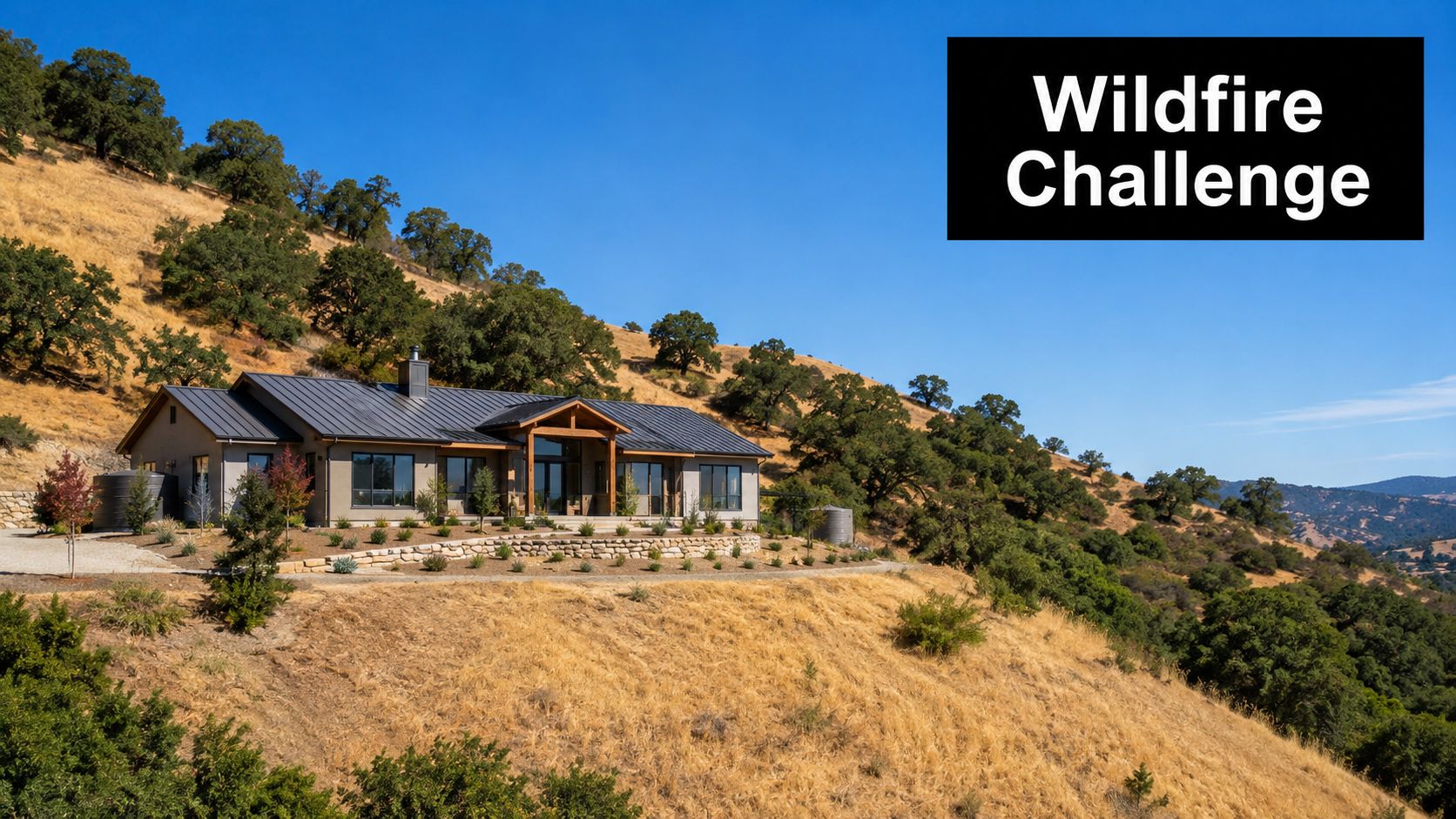
One insurer may offer a standard policy with wildfire protection built in. Another may issue a policy with limitations that require close review. A third may force the homeowner into a split arrangement where one piece of coverage comes from one source and the rest comes from another. That's the problem many national guides barely touch.
When quotes are not truly comparable
In wildfire-prone parts of the state, the issue isn't only cost. It's whether the quote includes standard fire protection in the first place. According to Insurify's homeowners insurance analysis, 34% of new homeowners in California wildfire zones faced coverage exclusions on standard policies in 2025 data.
That changes the comparison entirely. The homeowner isn't choosing between three bundled offers. The homeowner may be choosing between:
- A standard policy with fire included
- A policy with fire-related restrictions
- A policy that needs a separate fire solution, such as a FAIR Plan arrangement
Those are not apples-to-apples quotes, even if the premiums look close.
A California wildfire quote has to be judged by total protection, not by the headline premium.
How to price the full protection package
The practical fix is to calculate the total cost of ownership for each quote structure. If one insurer excludes or limits a standard fire component and another includes it, the comparison has to include the added cost and complexity of the supplemental policy.
That means reviewing each option through a fuller lens:
| Quote Type | What to Add to the Review |
|---|---|
| Bundled standard policy | Check fire terms, dwelling adequacy, deductibles, and exclusions |
| Restricted standard policy | Identify exactly what fire-related protection is narrowed |
| Split policy setup | Add the cost and conditions of the supplemental fire placement |
Most guides tell homeowners to compare equal deductibles and equal limits. That advice is still right, but in California it's incomplete. The bigger issue is whether one quote requires a second transaction, second policy form, second billing structure, or separate claims path to produce the same real-world protection.
That's the portability gap. It's the gap between a quote that looks complete and a quote that only becomes complete after extra work, extra premium, and more moving parts.
A homeowner in a high-fire-risk area should ask direct questions before selecting any policy:
- Is wildfire or fire loss fully covered in the base quote?
- Does this home require a FAIR Plan component or other separate placement?
- If coverage is split, who handles each piece?
- Are the dwelling limits and deductibles coordinated across the package?
The best quote in a wildfire zone often isn't the one with the lowest starting premium. It's the one that produces the clearest, most durable protection with the least hidden friction when a claim has to be filed.
Your Side-by-Side Quote Comparison Framework
A good comparison framework should help you make one decision. Which quote gives your household the best protection for a price you can live with, without hidden gaps that show up after a fire, smoke loss, or temporary displacement.
The worksheet that works
Use one row per insurer. Keep the fields consistent. If one quote includes a FAIR Plan plus a companion policy, treat that package as one option and record both parts together so the total cost and total protection stay visible.
- Total premium: Record the full annual cost for the complete setup, including any companion or difference-in-conditions policy.
- Dwelling limit: Confirm the quote matches the rebuilding target you established earlier.
- Deductible structure: Note flat deductibles, percentage deductibles, and any separate deductible that applies to fire or wind.
- Fire coverage setup: Mark whether fire is included in the base policy, restricted, or placed through the FAIR Plan.
- Personal property settlement: Record replacement cost or actual cash value.
- Loss of use: Check how much temporary housing coverage the policy provides if the home becomes unlivable.
- Liability limit: Make sure the number fits the household's risk, not just the lender's expectations.
- Key exclusions or endorsements: Write these in plain English, especially water, smoke, ordinance or law, and extended replacement cost terms.
- Claims handling practicalities: Note whether one claim could involve one carrier or two.
That last line matters more in California than many first-time buyers expect. A split arrangement can be the right answer in a high-fire area, but it creates more paperwork, more billing, and sometimes more coordination during a loss.
A simple worksheet might look like this:
| Carrier | Total Premium | Dwelling | Deductible | Fire Setup | Property Basis | Notes |
|---|---|---|---|---|---|---|
| Quote A | Higher | Aligned | Standard | Included in base policy | Replacement cost | Cleaner claims path |
| Quote B | Lower | Below target | Standard | Included in base policy | Replacement cost | Lower price because coverage is lighter |
| Quote C | Mid-range | Aligned | Split structure | FAIR Plan plus companion policy | Mixed terms | Acceptable, but more moving parts |
Once those fields are lined up, the comparison becomes practical. The strongest option usually stands out fast.
What usually makes the cheapest quote a bad deal
In my experience, a low premium usually points to one of a few trade-offs. The home is insured below rebuilding cost. The deductible is higher than the homeowner realized. Fire protection is handled through a more complicated structure. Or a useful coverage feature, such as replacement cost on contents or adequate loss-of-use coverage, has been reduced.
That does not make the low quote wrong. It means the price needs an explanation.
Use this review order:
- Eliminate any quote with an inadequate dwelling limit.
- Separate clean one-policy options from split FAIR Plan arrangements.
- Compare deductibles in dollar terms, not just percentages or labels.
- Check property valuation, loss of use, and major exclusions.
- Pick the option with the best balance of price, claims simplicity, and protection.
A quote that survives this review is far more likely to hold up when the loss is real, not just when the paperwork looks tidy.
For California homeowners, that is the goal. A policy package you can afford, understand, and count on if wildfire risk stops being theoretical.
From Comparison to Confidence and Getting Covered
A California homeowner often reaches the end of quote shopping with three prices, two different policy structures, and one big question. Which option will hold up if a wildfire loss turns from a worry into a claim?
The answer usually comes from one last decision check. Confirm that the dwelling limit reflects a realistic rebuild number. Confirm that the deductible fits your cash reserves. Confirm that fire coverage is clear, whether it sits in one policy or in a FAIR Plan plus companion setup. Then read the exclusions one more time, especially for loss of use, contents settlement, and any coverage gaps created by a split arrangement.
A strong final review is simple:
- The dwelling limit fits the rebuild need
- The deductible is acceptable
- The quote's exclusions are understood
- Wildfire protection is clear
- The total package makes sense, not just the premium
Confidence comes from being able to explain why a quote costs what it costs. In California, that often means paying a little more for cleaner coverage, fewer surprises, and a claims process that will be easier to manage under stress. If you want to cut the manual work, automated comparison tools can organize quote details faster and make mismatched coverage easier to spot, which is especially helpful when wildfire exposure or a FAIR Plan option complicates the choice.
Request a home insurance quote through DwellQuote to compare California coverage options faster, with less manual work and a clearer view of what each policy protects. For homeowners facing wildfire exposure, tight closing timelines, or first-time quote confusion, it offers a practical path from scattered estimates to a side-by-side decision that is easier to trust.