

A homeowner can do everything right and still get blindsided. A non-renewal notice may arrive while a refinance is pending, a carrier may ask for wildfire-mitigation records before offering terms, or a lender may reject a policy because the dwelling limit doesn't reflect the property's rebuild needs. In California, learning how to get homeowners insurance in California now requires more than filling out an application. The process involves documentation, underwriting strategy, coverage analysis, and a clear understanding of the FAIR Plan's limits.
Table of Contents
- Why Getting Homeowners Insurance in California Is Harder Now
- Gather the Right Documents and Property Details Before You Shop
- Private Market vs FAIR Plan Coverage Options
- How to Compare Quotes and Lock In the Best Policy
- Wildfire Mitigation Requirements That Affect Your Eligibility
- Avoid These Costly Mistakes When Buying California Home Insurance
Why Getting Homeowners Insurance in California Is Harder Now
A homeowner in a moderate wildfire-risk area can receive a non-renewal notice shortly before refinancing closes. The property has not burned, the neighborhood is not classified as extreme risk, and the homeowner has maintained the house. The lender still requires replacement coverage, while the current carrier will not continue the policy. Underwriting questions, mitigation records, and a deadline now collide.
California homeowners are relying more heavily on the FAIR Plan, the state's insurer of last resort. As of June 2026, it reported $768 billion in total exposure, 696,562 policies in force, and $2.04 billion in written premium, increases of 250%, 157%, and 212% since September 2022, according to the California FAIR Plan's key statistics. The shift has moved many households from the standard market into a state-backed option with narrower protection and potential wraparound costs.
Private coverage remains available, but insurers are examining property-level risk far more closely. Roof age, brush conditions, construction materials, emergency-vehicle access, nearby vegetation, and ember exposure can determine whether a carrier offers terms. A home that once received a routine quote may now prompt an inspection, mitigation request, higher surcharge, or decline.
The FAIR Plan is a fallback, not a normal replacement
California finalized a wildfire catastrophe-modeling rule on December 13, 2024. Insurers using catastrophe models in ratemaking must expand policy offerings in underserved wildfire areas, with a target of writing coverage equal to at least 85% of their statewide market share, followed by increases of 5% every two years until that threshold is met, as described in the California Department of Insurance annual report.
FAIR Plan growth later slowed. It added about 16,000 residential policies in the first quarter of 2026, followed by 1.9% growth in the second quarter, after earlier quarters in 2024 and 2025 added between 35,000 and 50,000 policies per quarter, according to the 2024 Annual Report of the Commissioner, California Department of Insurance. The same report documents the changing pace, but demand remains substantial.
The access rules also changed. A 2026 overview reports that applicants now need two written denials from admitted insurers within 365 days to qualify for the FAIR Plan, replacing the older three-denial standard. Save every written decline. Verbal refusals from agents may not satisfy the eligibility requirement.
| Metric | 2020 | 2025 | Change |
|---|---|---|---|
| FAIR Plan exposure | Not provided | Not provided | Increased substantially |
| Policies in force | Not provided | More than 668,000 reported in late 2025 | Increased substantially |
| Standard-market access | Broader | More restricted in wildfire-exposed areas | Structurally changed |
| Underwriting scrutiny | Lower | Higher | Increased |
Treat the FAIR Plan as a fallback, then price the missing protection. Its policy may require a wraparound policy for gaps such as liability or broader property coverage, and its premium structure can include surcharges. Start early, document accurately, preserve denials, and compare private quotes with the FAIR Plan. Services such as DwellQuote can streamline quote comparisons, but the homeowner still needs to verify limits, exclusions, and lender requirements.
Gather the Right Documents and Property Details Before You Shop
A missing roof record or vague occupancy description can delay a quote before pricing even begins. Build the property file first, then submit the same accurate information to every carrier or quote-comparison service.
Build the property profile first
Include:
- Property identification: Address, occupancy type, ownership structure, and whether the home is owner-occupied, rented, seasonal, or vacant.
- Construction details: Year built, square footage, foundation type, exterior siding, number of stories, attached structures, and major additions.
- Roof information: Roof material, installation date, remaining useful life, and Class A fire rating, if applicable.
- Utilities: Electrical panel type and update history, plumbing materials, heating system, fuel source, and major system renovations.
- Claims history: Prior losses and the property's CLUE report, which insurers may review when assessing reported claims.
- Mortgage information: Lender name, loan number, and the mortgagee clause wording required on the declarations page.
Describe the property as it exists today. An incorrect roof age, missing renovation record, or inaccurate occupancy description can trigger an inspection, change the quote, or lead to a decline after underwriting review. Keep permits, invoices, and contractor records together so you can correct discrepancies quickly.
The California Department of Insurance consumer guide advises consumers to compare price, service, and coverage. It also says to verify the limits, deductibles, company name, effective dates, and property shown on the application or binder, and to avoid signing blank or unclear forms. The DOI consumer guide also recommends reviewing the policy immediately after receipt, retaining signed documents, and keeping a home inventory.
Add wildfire records to the file
Wildfire documentation can determine whether an application proceeds. Gather:
- Defensible-space records: Photos, inspection findings, clearance documentation, and vegetation-maintenance records.
- Wildfire mitigation reports: Assessments identifying roof, siding, vent, window, deck, or access improvements.
- Roof evidence: Invoices, permits, contractor documentation, and product information confirming fire-resistant construction.
- Vent information: Product specifications showing flame- and ember-resistant construction or compliance with applicable standards.
- Exterior upgrades: Receipts and photos for noncombustible wall materials, enclosed areas beneath decks, and hardscaping near the structure.
DwellQuote can retrieve property data and prefill parts of the quote process, but review every field yourself. Automated records may miss a recent roof replacement, new siding, or completed defensible-space work. Correct those details before submitting the application, and keep copies of every document sent to the insurer.
Private Market vs FAIR Plan Coverage Options
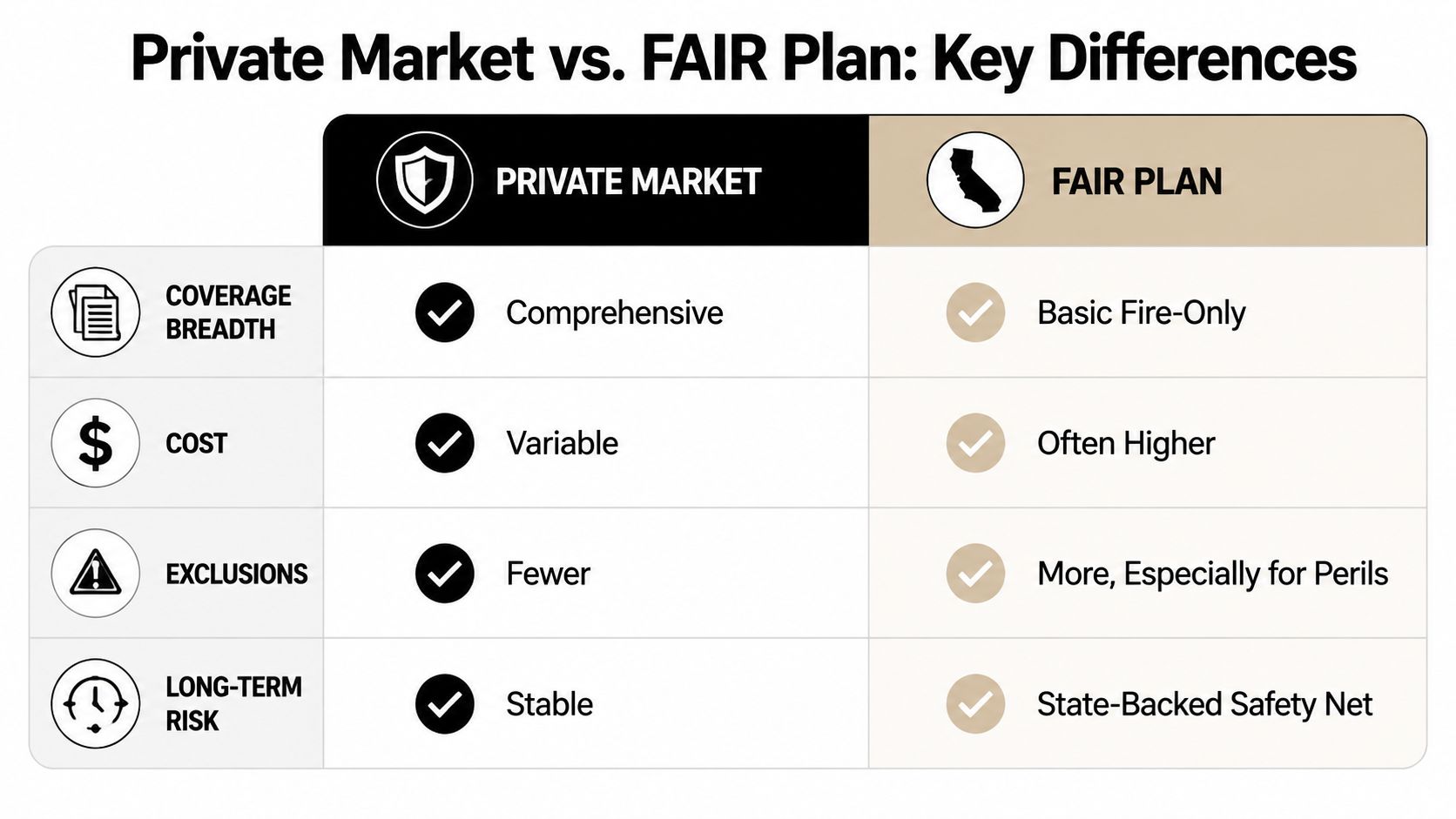
A private-market policy is usually the stronger starting point. Depending on its form and endorsements, it can combine dwelling, personal property, personal liability, additional living expenses, water backup, and ordinance or law coverage. Compare that full protection with the total cost of a FAIR Plan arrangement, not with the FAIR Plan premium alone.
The FAIR Plan has a narrower job. The California Department of Insurance describes it as an association of insurers licensed in California that provides basic property and casualty insurance. Homeowners who cannot obtain coverage after applying in the voluntary market can work through a licensed agent or broker, or review the California FAIR Plan through the Department of Insurance.
Coverage breadth matters more than the initial premium
Private policies commonly cover more causes of loss. FAIR Plan base coverage generally focuses on specified causes, including fire, smoke, and water damage resulting from firefighting. It does not automatically provide the full package found in a typical homeowners policy.
A FAIR Plan-only policy can leave significant gaps:
- Liability: Injuries or property damage for which the homeowner is legally responsible may not be covered.
- Theft: Stolen personal property may fall outside the base policy.
- Water damage: Many water-related losses are excluded from the basic FAIR Plan form.
- Loss of use: Temporary housing and other living expenses may require separate protection.
- Personal property: Limits and covered causes may be narrower than under a broader private-market form.
The 2026 FAIR Plan materials identify a residential effective limit of $3 million at one location, as shown in the 2026 FAIR Plan stipulation and order. That higher limit helps some higher-value homeowners who cannot obtain standard coverage, but it does not broaden the policy. A large limit on a narrow form can still leave expensive losses uninsured.
Coverage rule: Fire protection for the structure alone is not a complete homeowners insurance strategy. Check liability, theft, water losses, personal property, and temporary housing before accepting the policy.
The wraparound calculation can change the decision
Many homeowners pair the FAIR Plan with a Difference in Conditions, or DIC, policy. This wraparound layer can address some exclusions, but it introduces its own terms. Review the combined deductibles, exclusions, claims procedures, coverage limits, and renewal decisions. Two policies can also mean two insurers and more coordination after a loss.
The 29.1% rate increase noted above further complicates the total-cost picture. The increase is scheduled to take effect on October 15, 2026, and the FAIR Plan's announced customer impact makes an isolated FAIR Plan quote especially misleading. Compare the FAIR Plan premium, DIC premium, surcharges, deductibles, and uncovered exposures as one package, rather than treating the base premium as the final price.
Use the FAIR Plan as a fallback, not an automatic default. It becomes a practical choice after admitted carriers have declined the property, the homeowner has documented those denials, and no private-market or surplus-lines option offers adequate terms. Check the new two-denial eligibility rule with your agent, retain the declination records, and ask DwellQuote to help organize comparable options before placing the fallback coverage.
How to Compare Quotes and Lock In the Best Policy
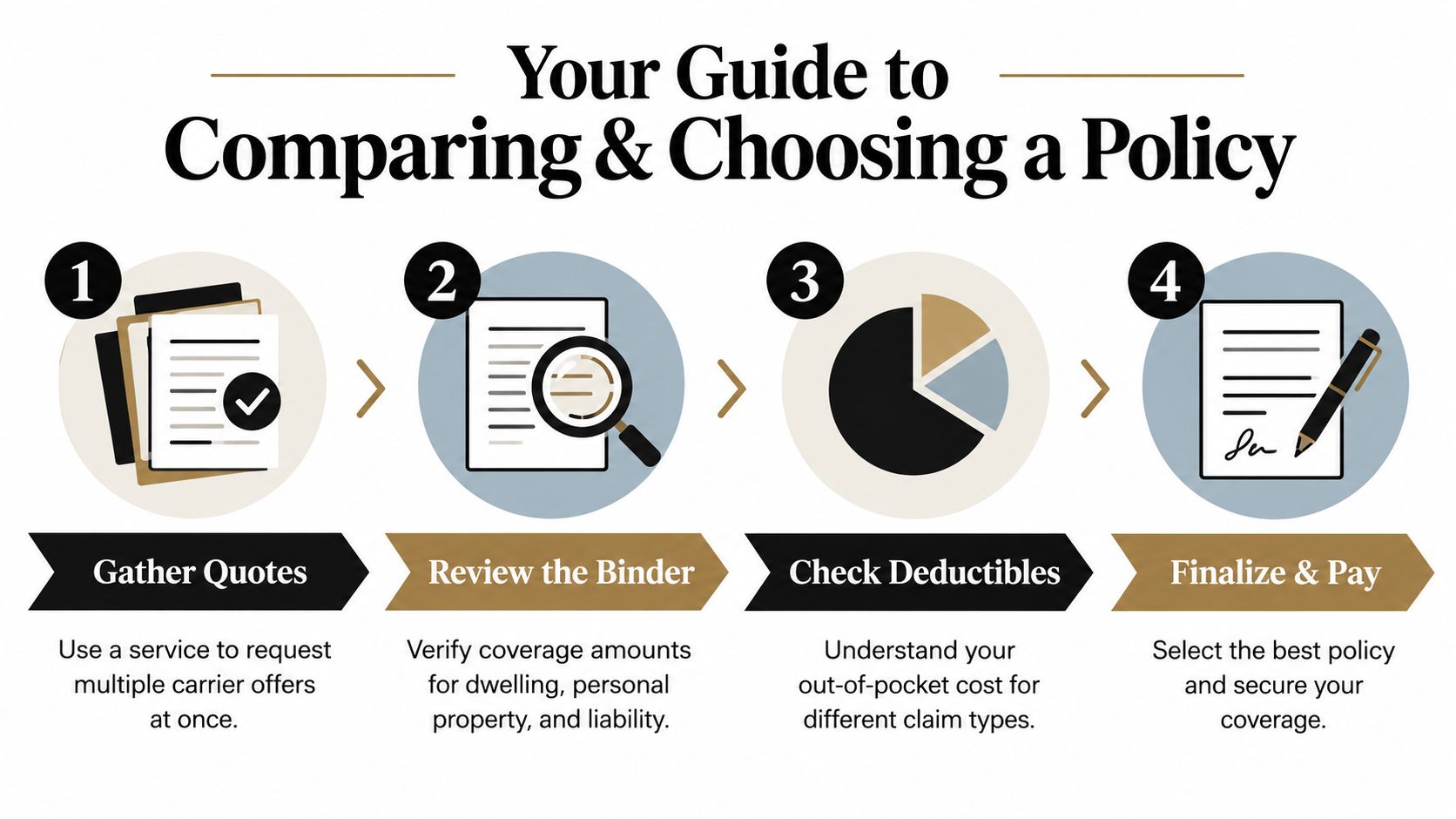
A low premium can conceal expensive gaps. Compare quotes only after matching dwelling limits, valuation methods, deductibles, exclusions, and endorsements. In California, the policy with the lowest price may leave the household paying more after a wildfire or a long rebuilding delay.
Read the binder line by line
A binder is temporary proof that coverage has been arranged before the insurer issues the full policy. Check the property address, named insureds, effective dates, insurer, coverage limits, deductibles, and endorsements. A mortgage lender may accept the binder for closing, but the issued policy still controls.
Set the dwelling limit from the estimated cost to rebuild, not the home's market value or remaining loan balance. Then check:
- Replacement-cost protection: Confirm whether the policy includes extended replacement cost or another feature that can address rebuilding above the stated limit.
- Personal property valuation: Actual cash value subtracts depreciation. Replacement cost generally covers the cost to replace covered property, subject to policy terms.
- Loss of use: Make sure additional living expense limits can support temporary housing during a lengthy California rebuild.
- Other structures: Review garages, detached workshops, fences, pools, and other structures separately.
- Endorsements: Confirm requested additions such as water backup, ordinance or law, and equipment breakdown coverage.
Deductibles deserve the same scrutiny. A policy may apply a general deductible plus separate wildfire, wind, or other peril deductibles. The declarations page should identify the deductible for each covered event and state whether it is a flat amount or a percentage of the dwelling limit.
Use a consistent comparison worksheet
A quote-comparison service can collect the property profile once and place available carrier offers in a common format. DwellQuote retrieves public and proprietary property data, lets the homeowner verify the profile, and displays coverage options for review. Use a licensed professional to clarify exclusions, endorsements, and conditions required before binding.
Compare the full cost, not just the quoted premium. For FAIR Plan arrangements, include any wraparound DIC premium, surcharges, separate deductibles, limits, and exclusions. A lower base quote can become the costlier choice once uncovered exposures and claim coordination are included.
After choosing an option:
- Confirm the binder: Match the address, named insureds, lender clause, limits, deductibles, insurer, and effective date.
- Pay and bind correctly: Follow the carrier or agency's payment instructions and obtain written confirmation that coverage is active.
- Review the issued policy: Compare its declarations page with the binder before assuming every agreed term carried over.
- Store the record: Keep the policy, applications, receipts, photos, mitigation reports, and inventory securely.
Coverage is not complete until the issued documents match the structure you requested.
Wildfire Mitigation Requirements That Affect Your Eligibility
Wildfire mitigation now affects both safety and insurance eligibility. Underwriters look for features that resist embers, reduce ignition points, and limit fuel near the structure. Your job is to make those improvements easy to verify.
Defensible space is a documented property condition
California wildfire guidance identifies construction features such as noncombustible material along the bottom 6 inches of exterior walls. It also addresses WUI vents that resist flames and embers or meet ASTM E2886 standards, according to the California wildfire mitigation summary.
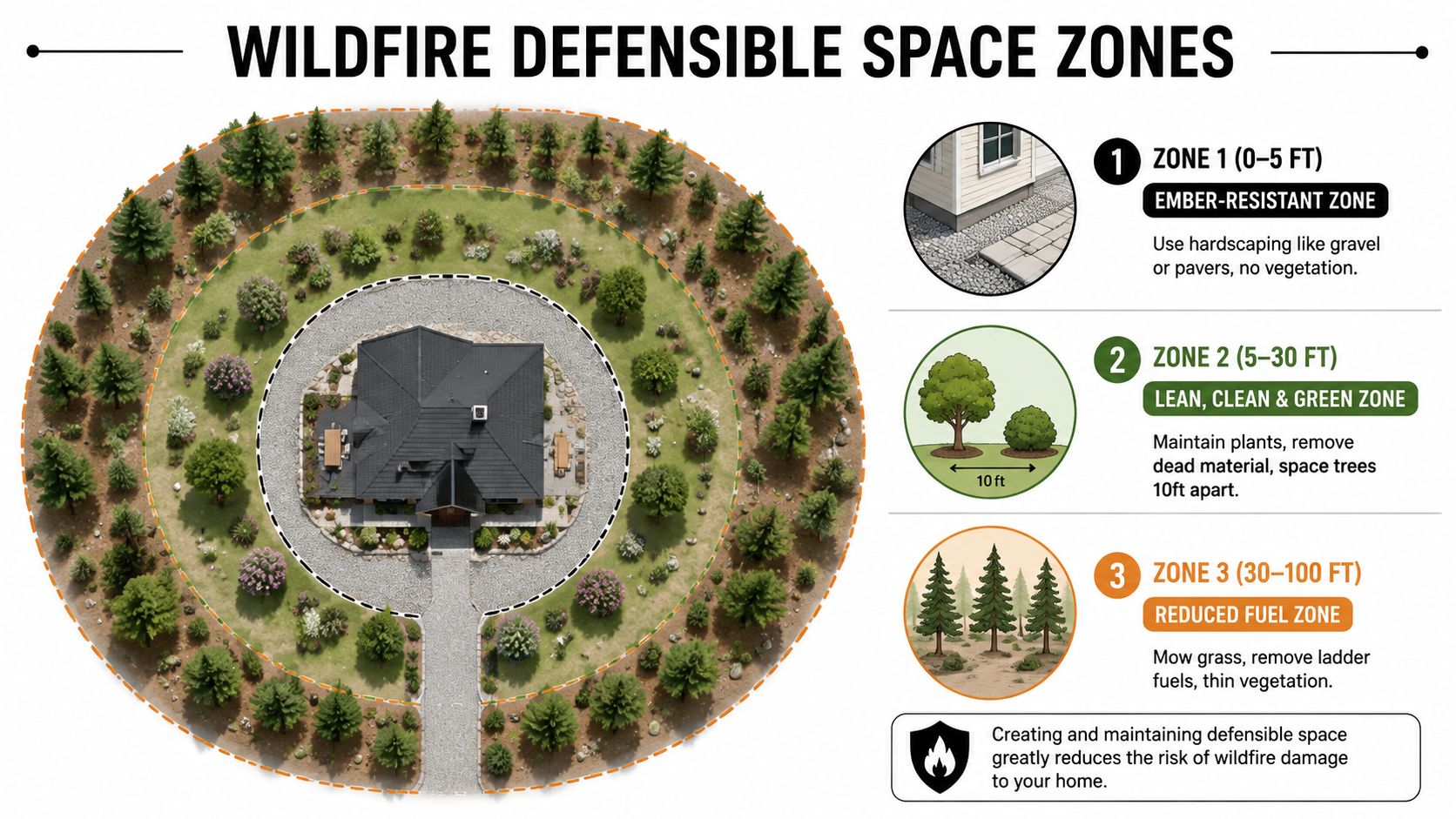
Defensible space is commonly divided into three zones:
- Zone 1: The area next to the home should use noncombustible materials and limit ignition-prone vegetation.
- Zone 2: Maintain and separate vegetation, removing dead growth and other combustible material.
- Zone 3: Manage larger vegetation and fuel to reduce the route fire could take toward the structure.
Insurers may request photos, inspection results, contractor invoices, permits, or mitigation disclosures. A verbal claim that the property is “cleared” carries less weight than dated records showing the work.
Prioritize upgrades an underwriter can verify
Fire-resistant roofing, ember-resistant vents, noncombustible siding, and protected openings address common underwriting concerns directly. Access, vegetation management, and separation between combustible materials and the home also matter.
Create a mitigation packet with:
- Before-and-after photos of the roof, vents, siding, decks, and vegetation.
- Receipts and permits for construction or replacement work.
- Product documentation for vents, roofing, windows, and exterior materials.
- Inspection reports from qualified assessors or local authorities.
- A concise property summary stating when each improvement was completed.
The California Department of Insurance's Safer from Wildfires resources can help clarify mitigation disclosures and insurer expectations. Carrier treatment varies, but documented upgrades give an underwriter specific evidence to review rather than leaving the application dependent on a generalized wildfire score.
That documentation also helps expose policy-design traps. If private coverage is unavailable and the FAIR Plan becomes the fallback, a projected 29.1% rate increase makes the combined cost of base coverage, any wraparound policy, and deductibles worth checking before you accept the offer. Use DwellQuote to organize property information and compare available options, then have a licensed professional confirm how mitigation evidence affects eligibility and coverage terms.
Avoid These Costly Mistakes When Buying California Home Insurance
A policy can look affordable and still leave a California homeowner exposed. The costly errors usually involve exclusions, lender conditions, incomplete applications, or a coverage structure that fails under a wildfire claim. Review those details before binding, not after a loss.
Check the policy design, not only the premium
As covered in the coverage options section above, the FAIR Plan's projected rate increase makes total-cost comparison necessary. Add the base policy premium, any wraparound DIC policy, separate deductibles, and coverage that remains excluded. A FAIR Plan fallback can solve the immediate eligibility problem while creating gaps in liability, theft, water damage, or other protections.
Use the residential insurance consumer guide to confirm what the application, binder, declarations page, and policy documents should contain. Do not sign blank forms. Correct property details, occupancy information, prior losses, and requested limits before the insurer issues coverage.
Do not let the lender choose the policy by itself. Mortgage lenders commonly focus on the dwelling limit, deductible, lender clause, and proof of insurance. Those requirements do not guarantee adequate personal property, liability, additional living expense, ordinance and law, or water backup coverage. Send the lender the declarations page and confirm that its requirements match the policy you want.
Earthquake damage is normally outside a standard homeowners policy, so a home can be insured for wildfire and still lack protection for a major seismic loss. Ask specifically whether earthquake coverage is available, what deductible applies, and whether separate exclusions affect foundations, masonry, or personal property. Properties in areas with unusual ground conditions also need a direct review of exclusions rather than assumptions based on the home's ZIP code.
Timing creates another avoidable risk. A carrier may request inspections, vegetation details, roof information, photographs, or additional underwriting documents before binding. Start before renewal, especially if the current insurer has issued a non-renewal notice. Keep the existing policy active until replacement coverage is confirmed in writing, and do not cancel based on a quote alone.
The FAIR Plan's two-denial eligibility rule also requires careful records. Obtain the required written declines from admitted insurers within the applicable period, save the full correspondence, and confirm that the denials meet the application requirements. Verbal refusals and incomplete emails may not establish eligibility.
A practical final review
Before accepting an offer, compare the total cost and the remaining gaps. Verify the dwelling limit against current rebuilding needs, then check deductibles, exclusions, endorsements, liability, additional living expense, and lender wording. Have a licensed professional explain any term that would change claim payment.
DwellQuote lets California homeowners submit core property details, confirm retrieved property information, and compare available home insurance options without contacting insurers one by one. Visit DwellQuote to request a quote, compare coverage for the property's wildfire and underwriting profile, and proceed with licensed support when the selected policy is ready for binding.