
Cooking remains the biggest single source of U.S. home fire risk. The U.S. Fire Administration reports 167,800 cooking fires in 2023 and 160,300 in 2024, which is why any serious look at the leading causes of house fires has to start in the kitchen, not at the edge of a wildfire map.
That said, California changes the calculation. The most frequent fire source isn't always the one that creates the hardest insurance problem, the worst property loss, or the greatest threat to life. A stovetop flare-up, a wiring failure inside an older wall, a cigarette that smolders into upholstery overnight, and an ember storm in a wildland urban interface neighborhood all sit in different parts of the same risk picture.
For homeowners comparing policies, that difference matters. Some hazards are mostly about day-to-day prevention. Others affect underwriting, inspections, replacement decisions, or whether a carrier asks more questions about roof materials, defensible space, wiring upgrades, or occupancy patterns. Frequency matters. Severity matters more when a fire jumps units, reaches the attic, or turns a routine claim into a total-loss event.
This ranking prioritizes ten causes by combining national frequency, likely severity, California-specific exposure, and the insurance decisions each risk can influence. Each section focuses on three things: what drives the risk, what homeowners can do to reduce it, and what to document or ask when comparing coverage.
California homeowners who want to pressure-test their protection should request a home insurance quote through dwellquote.com while reviewing these risks. Comparing coverage while the house is still safe is far easier than sorting out exclusions, deductibles, or rebuilding limits after smoke and fire damage have already happened.
Table of Contents
- 1. Cooking Equipment and Unattended Cooking
- 2. Heating Equipment and Space Heaters
- 3. Electrical and Lighting Equipment Failures
- 4. Smoking and Cigarettes
- 5. Wildfire Exposure and Ember Intrusion
- 6. Candles, Fireplaces, and Decorative Fire Sources
- 7. Improperly Maintained or Unsafe Appliances
- 8. Flammable Liquids and Gases
- 9. Children and Fire Play
- 10. Intentional Fires Arson
- Top 10 Causes of House Fires, Comparison
- Turn Fire-Risk Awareness Into a Coverage Checklist
1. Cooking Equipment and Unattended Cooking
Cooking sits at the top because it combines constant exposure with simple, common failure points. Hot oil, food left on a burner, paper packaging near a flame, and split-second distraction can turn a normal meal into a room fire. In dense California neighborhoods, a kitchen fire also creates a second-layer risk because the loss may extend beyond one household.
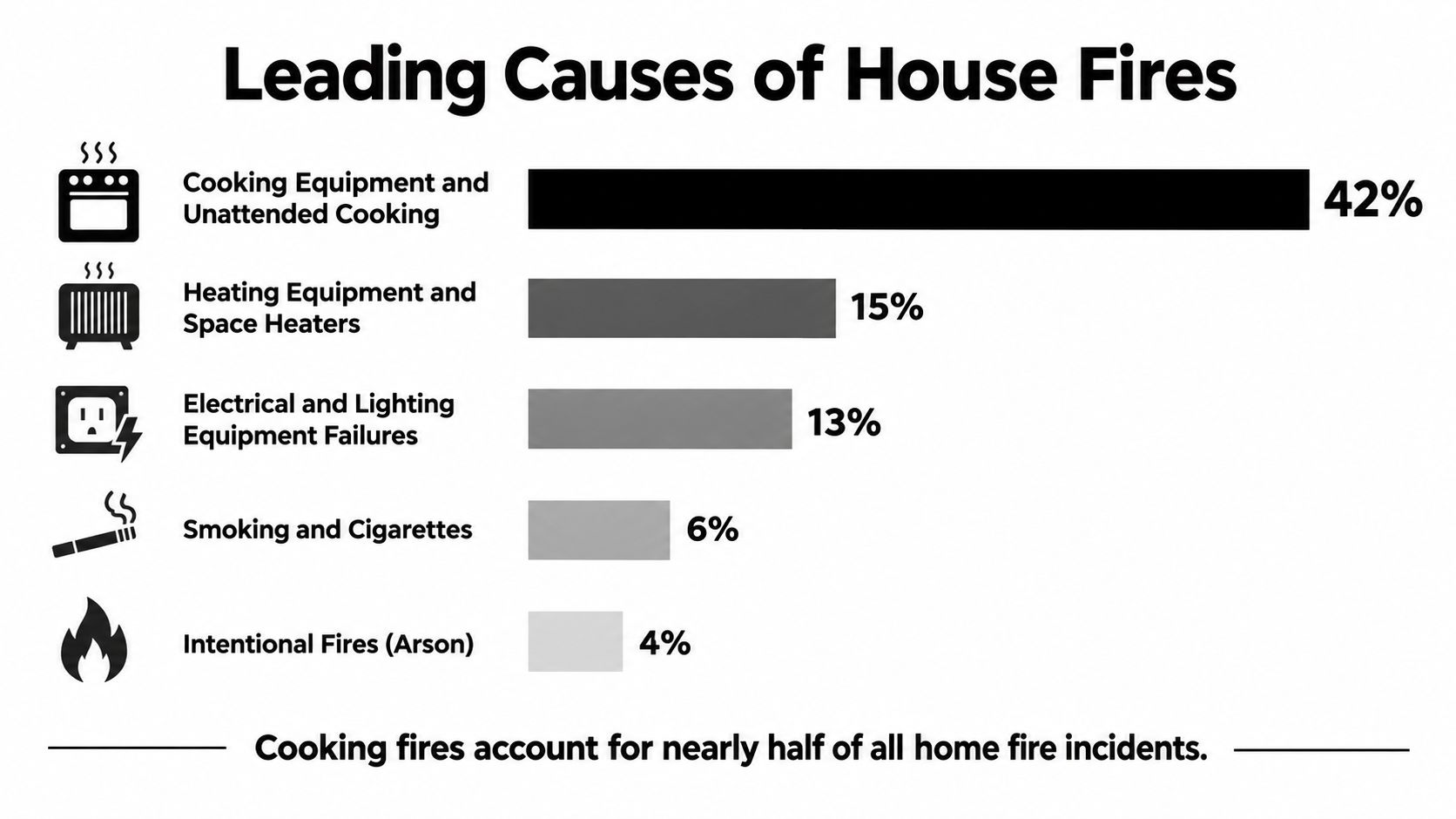
National fire data makes the point clearly. Across the 2020 to 2024 period, kitchen and cooking equipment were involved in 48% of home structure fires, 35% of home fire injuries, and 16% of home fire deaths. That scale matters because it shows how often routine meal preparation becomes the first link in a much larger property loss.
Why kitchens create outsized risk
A kitchen compresses heat, grease, power cords, textiles, cabinets, and human distraction into one room. In a single-family California home, that can mean flame spread into upper cabinets and attic voids. In a condo or apartment, it can also trigger hallway smoke migration, sprinkler discharge, and displacement for multiple households.
Practical rule: If someone has to leave the kitchen, the burner should go off first.
The most effective controls are simple and physical, not theoretical. Homeowners lower risk when they keep towels and packaging away from burners, cook on back burners when possible, turn pot handles inward, and keep a grease-rated extinguisher within reach but not so close to the stove that accessing it requires moving through flames.
- Stay present: Unattended cooking is one of the fastest ways a minor pan fire turns into a structure fire.
- Clear the zone: Keep curtains, paper goods, oven mitts, and grocery packaging away from the cooktop.
- Support early detection: Maintain smoke alarms near cooking areas so occupants get warning before smoke fills sleeping spaces.
For insurance comparisons, the kitchen is where homeowners should ask practical questions. How is smoke damage handled if flames stay contained? What happens if a neighboring unit is affected? How much additional living expense coverage applies if a kitchen loss makes the home temporarily uninhabitable?
2. Heating Equipment and Space Heaters
Heating fires don't win on frequency, but they remain one of the clearest examples of preventable ignition. Space heaters, fireplaces, and wood stoves all create the same problem. They bring intense heat into direct contact with fabrics, furniture, flooring, and dust, often during cold snaps when households are tired, crowded indoors, or using backup equipment.
That matters in California more than nonresidents often assume. Coastal homes can be damp and under-heated. Inland valleys see cold nights. Mountain communities rely heavily on supplemental heat. In rentals and older homes, portable heaters often fill gaps left by aging central systems or rooms that never warm evenly.
The insurance angle is maintenance and use
Heating equipment creates underwriting questions because its risk depends heavily on how people use it. A built-in system with documented servicing presents one profile. A portable heater plugged into an overloaded power strip near bedding presents another. A wood stove with an uncleaned flue raises a different concern again.
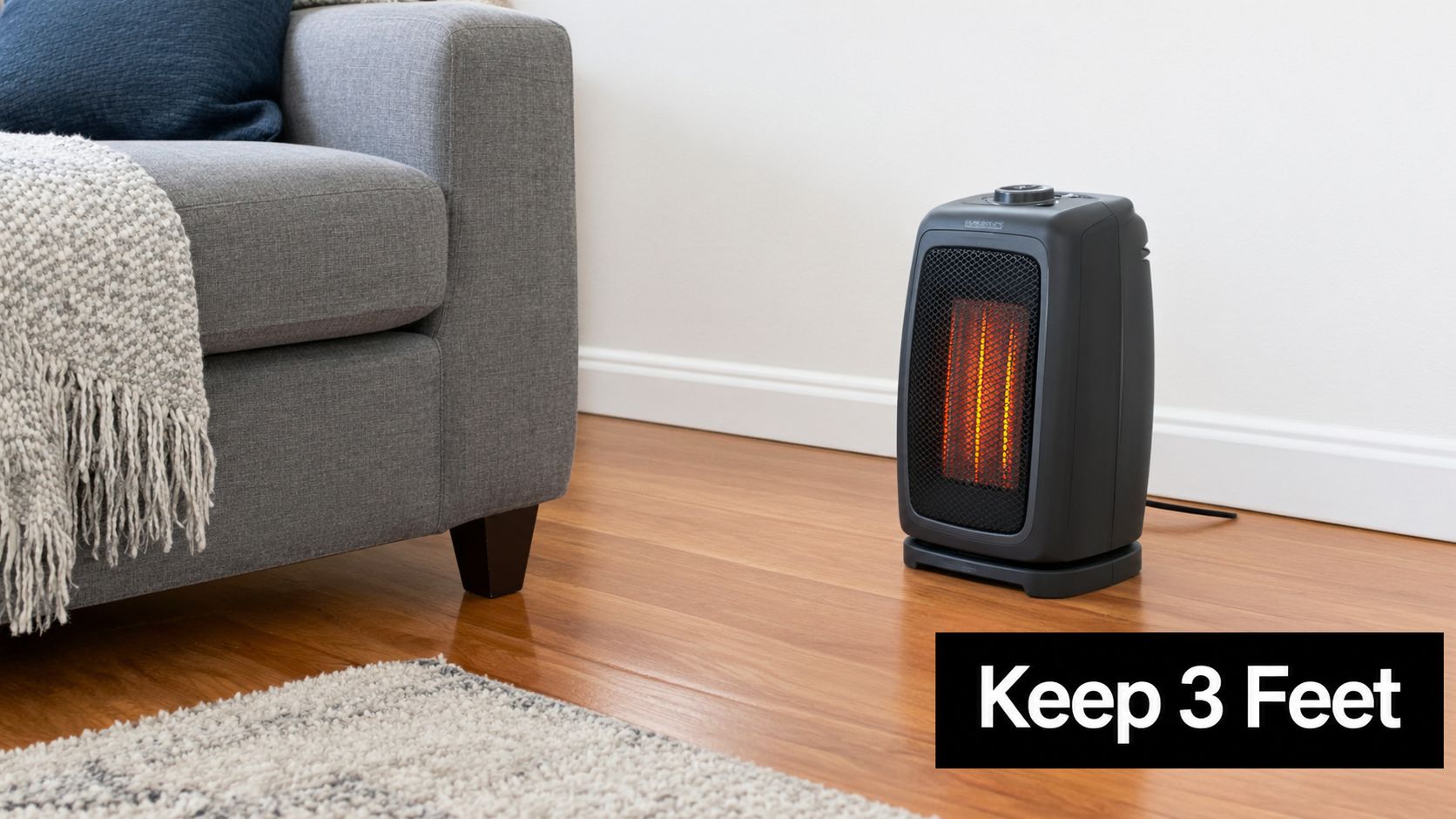
The practical prevention standard is distance and shutdown discipline. Keep heaters on flat, nonflammable surfaces. Keep them well away from bedding, drapes, papers, and upholstered furniture. Unplug portable units when they aren't in use, and never leave them running in a sleeping room.
Heating equipment fires often start with ordinary shortcuts: one blanket too close, one damaged cord, one heater left running overnight.
For policy comparisons, California homeowners should document fireplace inspections, chimney cleaning, and any permanent heating upgrades. That won't guarantee availability or pricing outcomes, but it gives carriers a clearer, more current picture of the home's risk profile. It also helps when an inspector asks whether the dwelling depends on portable heat, wood burning, or older fuel-burning equipment.
3. Electrical and Lighting Equipment Failures
Electrical and lighting equipment failures rank high for a different reason than cooking or heating. They are not always the most visible ignition source at the moment the problem starts, but they can produce some of the most expensive losses because heat builds inside walls, panels, attic spaces, and fixtures before smoke or flame is obvious.
NFPA reports an estimated average of 31,650 home fires per year from 2019 to 2023 caused by electrical distribution or lighting equipment, with 70% involving wiring and related equipment and 10% involving cords or plugs. That split matters. Homeowners often focus on overloaded power strips and phone chargers, while the larger share of risk sits in branch wiring, connections, outlets, switches, and panels.
California adds a specific pressure point. Many homes were built long before current electrical demand became normal. Air conditioning, high-wattage kitchen equipment, home office loads, entertainment systems, and EV charging can push an older system far beyond what it was designed to handle. In hillside or wildfire-prone areas, a fault that starts indoors can also become an exterior exposure problem if a fire spreads before suppression begins.
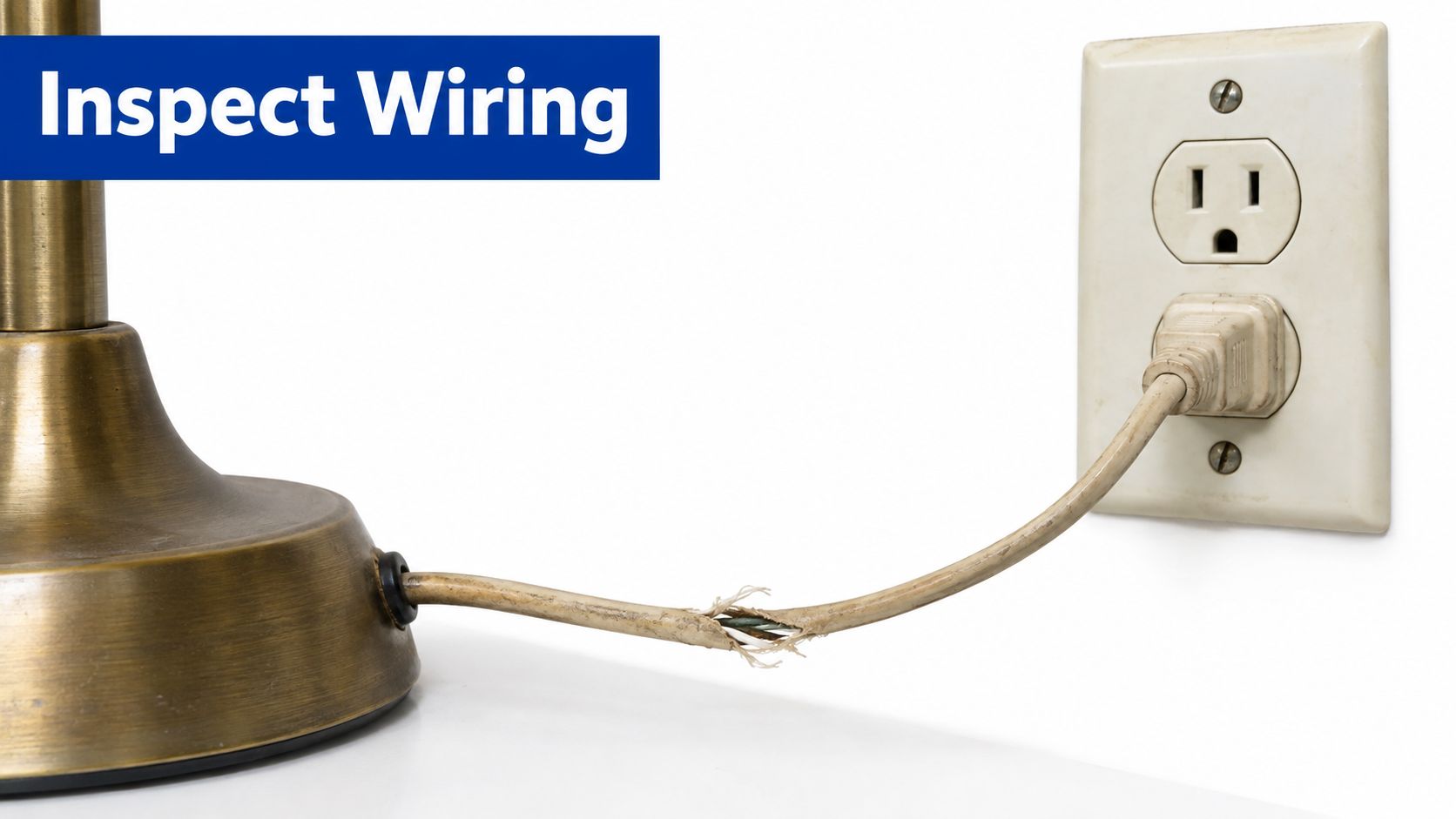
The useful distinction here is frequency versus severity. Small misuse is common. System-level failure is less routine, but it tends to matter more for structural damage, temporary displacement, and underwriting questions. A frayed lamp cord is an immediate replacement issue. Repeated breaker trips, buzzing at the panel, warm switch plates, or flickering that affects multiple rooms point to a broader electrical problem that deserves inspection, not another workaround.
Three actions usually reduce this risk more than buying another surge strip:
First, have a licensed electrician assess older service panels, outdated branch circuits, and any signs of overheating or improvised additions.
Second, stop treating extension cords as permanent wiring. If a room needs one all the time, it probably needs another receptacle or a circuit upgrade.
Third, document major electrical work carefully. Permits, invoices, and clear photos of panel replacements or rewiring help answer insurer questions about knob-and-tube wiring, aluminum wiring, fuse boxes, or recent upgrades.
For California insurance, this category can influence both eligibility review and inspection follow-up. Some carriers ask detailed questions about the age and type of wiring or panel equipment, especially in older homes. An upgrade does not promise a discount, broader coverage, or easier placement on its own. It does give the insurer better evidence that the risk has been reduced, which can matter when a home would otherwise raise concerns during underwriting.
4. Smoking and Cigarettes
Smoking doesn't produce the same volume of incidents as cooking, but it belongs near the top because the severity profile is worse. A dropped cigarette can smolder unnoticed in a sofa cushion, mattress, or trash container for a long period before open flame appears. That delay makes nighttime fires especially dangerous.
NFPA draws the distinction that many homeowners miss. It says cooking is the leading cause of home fires and injuries, but smoking materials cause the largest share of home fire deaths. The same report notes that operating equipment plus open flames and smoking materials accounted for 72% of home fire deaths and 76% of injuries from 2019 to 2023. Frequency and lethality aren't the same thing.
Smoldering ignition is the real problem
A pan fire often produces fast warning. A cigarette in bedding may not. That's why smoking-related losses are so often linked to sleep, fatigue, medication, alcohol use, or reduced mobility. In California single-family homes, the risk is still highly personal and highly preventable even where indoor smoking rules are stricter in multifamily settings.
The clearest prevention policy is a no-smoking-indoors rule for both residents and guests. If someone smokes, the safest setup is a designated outdoor area away from structures, with a deep ash receptacle and water for disposal. Smoking in bed or on upholstered furniture creates the exact conditions that turn an ember into a fatal overnight fire.
A low-frequency hazard can still deserve top attention if it causes a disproportionate share of deaths.
For insurance decisions, households should think beyond property damage. If an older relative, tenant, or caregiver smokes, that behavior affects evacuation time, injury risk, and liability exposure. The practical question isn't whether smoking is common in the home. It's whether a single mistake would be detected fast enough for everyone to get out.
5. Wildfire Exposure and Ember Intrusion
Wildfire changes the ranking in California because it can produce the largest loss from a cause that often starts off the property. A home may have no indoor ignition problem at all and still be exposed through embers, nearby vegetation, slope, wind patterns, or the spacing between structures. That makes wildfire different from the causes above. Frequency at the national level matters less here than severity, address-level exposure, and the insurance consequences tied to that exposure.
For many homes, the first failure point is not a wall or window. It is a small opening or fuel source that gives embers a place to land and grow.
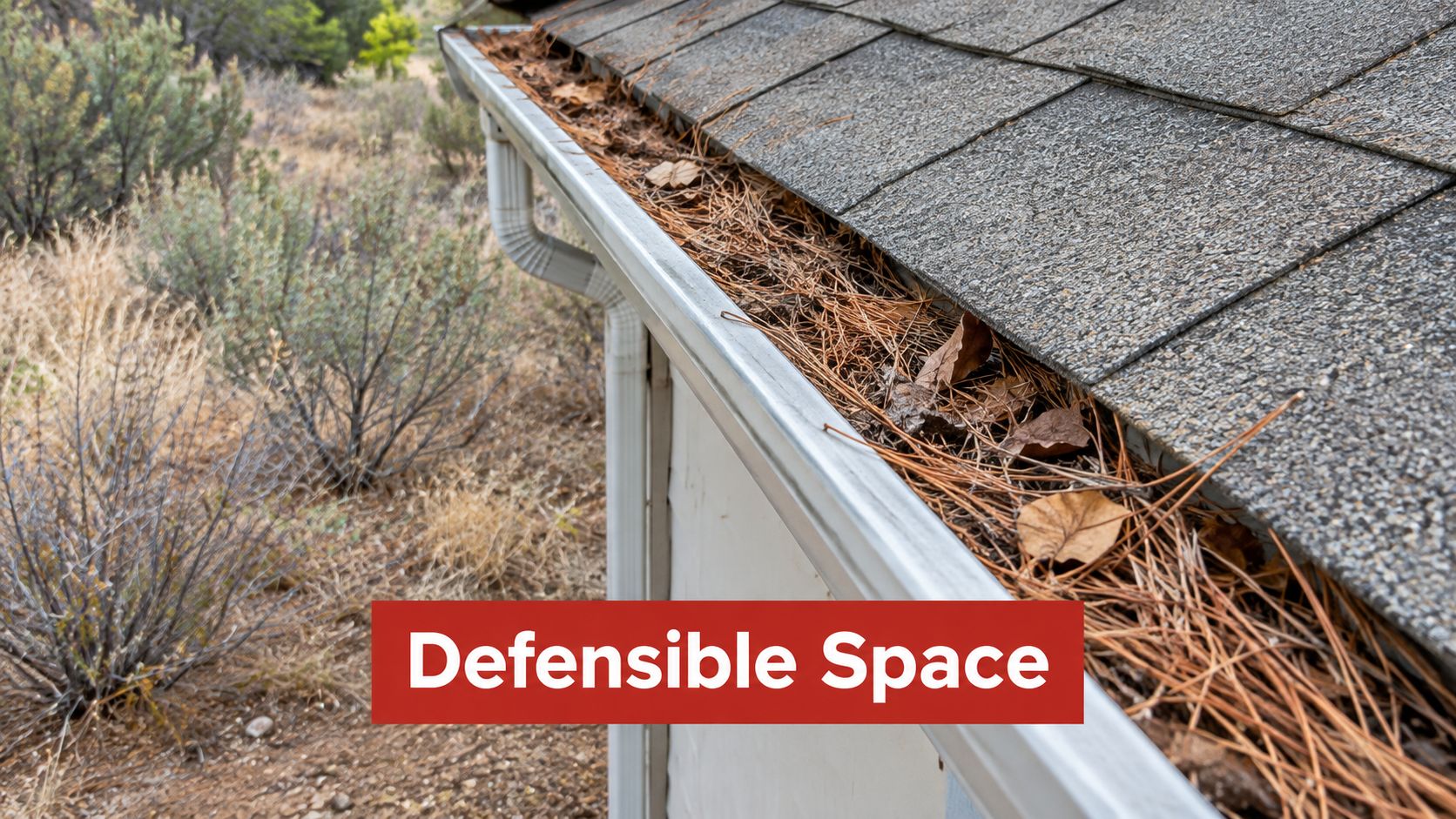
Roofs, gutters, vents, decks, fences, mulch, and dry debris all matter because ember intrusion often begins with transfer, not direct flame contact. Owners who focus only on brush clearance can miss the more practical question: where could an ember lodge, smolder, and ignite the structure before firefighters arrive? In California, that question affects both loss prevention and insurability.
A useful way to prioritize the work is by control zone:
- At the structure: Clear roof valleys and gutters, screen or harden vents where appropriate, and remove combustible debris from under decks and against exterior walls.
- In the first few feet around the home: Reduce combustible mulch, dead plants, stored materials, and attached items that can carry fire to the building envelope.
- Across the lot: Prune, space, and remove vegetation based on fuel load and proximity to the house, not curb appeal.
This is one of the few major fire risks where photos and maintenance records can matter almost as much as the work itself. If an insurer, inspector, or mitigation program reviews the property, documented clearing, exterior hardening, and ongoing upkeep can help show that the risk is being actively managed. It does not guarantee coverage, acceptance, or lower premiums. It can still influence underwriting discussions, renewal reviews, and the options available to a household in a higher-risk area.
Coverage review also needs a different lens here. Wildfire can damage the main dwelling, detached structures, landscaping, and access to the property at the same time, while also forcing a long displacement. Homeowners should check dwelling limits, other-structures coverage, and additional living expense terms carefully. In some California locations, standard-market availability may be limited, and households may need to compare private-market offers with FAIR Plan options and companion policies. Prevention reduces the chance of loss. It does not remove the need to match coverage to a wildfire-prone address.
6. Candles, Fireplaces, and Decorative Fire Sources
Open flame is not among the most frequent drivers of house fires, but it can produce expensive losses from a very small starting point. That tradeoff matters in California homes, where decorative candles, wood-burning fireplaces, gas fire features, and seasonal décor are common, yet the ignition source is often treated as low stakes because it is familiar and intentional.
The pattern is less about equipment failure than about routine drift. A candle gets placed on a crowded dresser. A mantel collects cards or dried décor over time. A fireplace that sits unused for months is lit on a cold night without checking the screen, flue, or ash buildup first. Pets, children, guests, and holiday rearranging all raise the odds that safe clearances shrink without anyone making a conscious decision to accept more risk.
A practical way to rank this category is by severity per incident. A single candle can char one surface and stop there. It can also ignite curtains, bedding, or paper goods in minutes. Fireplaces create a different exposure profile. The flame is more contained, but embers, creosote, neglected chimney conditions, and nearby combustibles can turn an occasional comfort feature into a structural fire source.
For prevention, substitution does more than reminders. Flameless candles remove the ignition source. If a real candle is still used, the rules should be strict and simple: hard, stable surface; substantial clearance from fabrics, books, and décor; and no use in bedrooms or anywhere people may fall asleep. Decorative fire bowls and tabletop features need the same spacing discipline, especially on patios with cushions, umbrellas, or stored items nearby.
Fireplaces deserve a separate checklist because the failures are different:
- Keep a screen in place during use to reduce ember escape.
- Store rugs, baskets, kindling, and firewood well back from the hearth.
- Let ashes cool completely, then dispose of them in a metal container.
- Schedule chimney inspection and cleaning based on actual use, especially before the first burn of the season.
This cause can influence insurance decisions, but usually indirectly. A candle or fireplace is rarely the headline underwriting issue in the way wildfire exposure or obsolete wiring can be. It can still affect claim outcomes. Smoke damage, soot cleanup, and temporary displacement can be expensive even when the visible burn area is small. Households should review whether dwelling limits, personal property limits, and additional living expense coverage still look adequate for a smoke-heavy interior loss. If the home has a wood-burning fireplace, older chimney, or added decorative fire feature, keeping maintenance records and basic safety practices documented may help during underwriting or claim review. It does not guarantee broader coverage, lower premiums, or claim approval.
7. Improperly Maintained or Unsafe Appliances
Appliance fires sit in the gap between obvious hazards and ignored maintenance. Homeowners tend to notice broken appliances, but fire losses often come from neglected ones that still seem to work: a dryer vent packed with lint, a gas range with a poor connection, an aging refrigerator motor, or a washer that overheats in a garage laundry area.
This category matters because it often overlaps with other causes. An appliance can fail electrically, ignite nearby combustibles, or create gas-related fire conditions. In older California homes, that overlap gets sharper because dated appliances are often paired with dated outlets, cramped utility spaces, or improvised installation work from prior owners.
Small maintenance failures create large ignition opportunities
Dryers are the most practical example. Lint is combustible, and poor venting lets heat and debris collect where owners rarely look. Gas appliances create a different kind of hazard because improper installation or deferred service can lead to leaks, flash ignition, or persistent unsafe operation.
The best prevention approach is calendar-based, not memory-based. Clean the dryer lint trap after every load. Inspect and clean the exhaust system regularly. Keep the appliance area clear of boxes, paper products, and spare cleaning chemicals. Register appliances for manufacturer recall notices and keep manuals or model information accessible.
Unsafe appliances rarely fail at a convenient time. They fail when heat, dust, wear, and neglect have been accumulating for months.
Insurance implications are practical here. If a claim follows an appliance fire, carriers may ask about maintenance, age, or prior known issues. Keeping service records, installation invoices, and serial information won't prevent a fire, but it can reduce friction when the household needs to explain what happened and what was already upgraded.
8. Flammable Liquids and Gases
A small fuel fire can become a total-loss event faster than many higher-frequency household fires. The reason is concentration. Gasoline vapors, propane leaks, and solvent fumes can ignite in enclosed spaces and spread through garages, sheds, and utility areas before anyone has time to contain them.
This category ranks lower by incident count than cooking or heating equipment, but its severity can be disproportionate. California homes often compound the risk because garages double as storage rooms, workshops, charging stations, and wildfire buffer zones for yard equipment and spare fuel. One ignition source can involve vehicles, tools, landscaping supplies, and stored personal property in the same fire.
Independent insurer guidance from Australia also points to a newer prevention issue that fits this category in practice: lithium-ion battery powered devices as a current fire-prevention topic. That link matters less as a trend story than as a storage story. E-bikes, scooters, cordless tools, and power banks are often kept in the same garage spaces as paint, fuel, cardboard, and lawn equipment.
The practical control is separation. Store gasoline only in approved containers. Keep propane tanks outdoors, upright, and away from doors or ignition sources. Limit the amount of paint thinner, solvents, and spare fuel on site to what the household will use soon. Charge battery devices with the correct equipment, on stable non-cluttered surfaces, and treat swelling, impact-damaged, or modified battery packs as replacement items, not as devices worth one more overnight charge.
A useful test is simple: if a spark from a water heater, charger, switch, or power tool could reach the storage area, the setup is poorly arranged.
Insurance effects here are narrower than people assume, but they matter. A fire that starts in a garage or outbuilding can raise questions about where high-value items were kept, whether detached structures need enough Coverage B, and whether personal property limits reflect bikes, tools, outdoor equipment, or hobby gear stored outside the main living area. California carriers may also look closely at loss details if fuel storage was unsafe or if a modified battery device was involved. That does not mean a claim will be denied because fuels or batteries were present. It does mean documentation helps. Keep photos, receipts, and model information for expensive equipment, and review whether the policy limits match what is stored there.
9. Children and Fire Play
Children rarely account for the highest number of home fire losses, but this cause deserves a place in the top 10 because the ignition often starts in bedrooms, closets, or other spaces where detection can lag and escape decisions become chaotic fast.
The risk pattern is different from cooking, heating, or electrical failures. It depends less on equipment condition and more on whether a child can get a flame source without friction. Curiosity matters, but household setup matters more. A lighter left on a nightstand, matches in a kitchen drawer, or novelty lighters treated like harmless objects can turn a brief lapse in supervision into a room fire.
Access control does more work here than rules alone.
High storage is better than open counters, but locked storage is stronger because children watch routines and copy adults. That applies beyond parents. Grandparents, babysitters, houseguests, and older siblings can all create the same gap if they leave ignition tools within reach. Candles, utility lighters, fireplace matches, and grill starters belong in that same category.
A practical home check works better than a generic warning. Walk through the house at child eye level and identify every item that can create flame or heat on first use. Then ask a narrower question. Could a child reach it during ten unsupervised minutes in a bedroom, hallway, garage, or patio area? If the answer is yes, the control is weak.
Insurance implications are usually indirect, but still relevant. Child fire play is less about a special discount or a separate endorsement than about loss prevention and claim documentation. If a fire starts in a child's room or another interior area, carriers may examine point of origin, who was home, and the condition of smoke alarms as part of ordinary claim review. That does not mean coverage disappears because a child caused the ignition. It means households should keep alarm maintenance records, photos after safety upgrades, and an inventory of major belongings in rooms where a fast-moving fire could destroy proof of ownership.
10. Intentional Fires Arson
Intentional fires belong on any serious list of the leading causes of house fires because homeowners can't fully control the motive behind them. Arson may involve vandalism, fraud, retaliation, trespass into vacant structures, or spillover from neighboring criminal activity. Even when the event starts off-property, the loss can still land on the insured homeowner.
This is also one of the clearest examples of why neighborhood context matters. A well-maintained house can still face increased exposure if adjacent lots are neglected, vacant buildings attract trespassing, or exterior storage gives a bad actor easy fuel. In urban and semi-urban California settings, that makes perimeter conditions relevant, not just interior conditions.
Prevention is mostly about deterrence and documentation
Homeowners can't eliminate arson risk, but they can make a target less attractive and a claim easier to support. Good exterior lighting, trimmed vegetation, locked gates, and visible sightlines reduce hiding places. Removing combustible clutter from porches, side yards, and around trash areas limits easy ignition material.
Documentation matters here more than many owners expect. Current photos of the home's condition, upgrades, and major belongings can help establish pre-loss condition if a fire is suspicious or part of a larger investigation. Security cameras and monitored alarms may also provide useful evidence when timing or point of origin becomes disputed.
Intentional fire is one of the few causes where prevention and claims preparation matter almost equally.
Insurance conversations should stay careful and factual. No homeowner should assume a policy treats every suspicious fire the same way, or that every address receives the same carrier interest. Availability and underwriting vary. The practical step is to compare options early, keep property records current, and ask how the policy handles loss of use, detached structures, and personal property after a severe fire event.
Top 10 Causes of House Fires, Comparison
| Item | Implementation complexity | Resource requirements | Expected outcomes | Ideal use cases | Key advantages |
|---|---|---|---|---|---|
| Cooking Equipment and Unattended Cooking | Low–Moderate: mostly behavioral changes; optional device upgrades | Low–Moderate: education, smoke alarms, Class B extinguisher, auto-shutoff stoves | Significant incident reduction with attention and safety devices | All households, especially multi-unit kitchens and busy homes | Highly preventable; immediate risk reduction from habits and basic devices |
| Heating Equipment and Space Heaters | Moderate: clearance rules and safer unit selection; system upgrades are complex | Low–High: safe heaters, inspections, possible HVAC upgrades | Substantial reduction in winter fires if clearances and safety features used | Homes needing supplemental heat, rentals, older buildings | Flexible heating with modern tip-over/overheat protections |
| Electrical and Lighting Equipment Failures | High: professional inspection, rewiring, breaker upgrades | High: licensed electricians, AFCI/GFCI, rewiring costs | Long-term risk reduction but costly and disruptive to implement | Older homes, properties with outdated wiring or frequent electrical issues | Durable safety improvements when brought to code; hidden-fault mitigation |
| Smoking and Cigarettes | Low–Moderate: policy enforcement and behavior change | Low: designated outdoor areas, ashtrays, supervision | Large reduction in fire deaths and smoldering ignitions when indoor smoking banned | Homes with smokers; multi-family housing adopting smoking bans | Entirely preventable by behavior; also improves health and may lower premiums |
| Wildfire Exposure and Ember Intrusion | High: landscape and structural mitigation plus community planning | High: defensible space work, fire-resistant materials, ongoing maintenance | Meaningful reduction in structure ignition risk; not fully preventable in extreme events | Properties in wildland-urban interface and high fire-risk zones | Mitigation improves survivability and insurability; community programs available |
| Candles, Fireplaces, and Decorative Fire Sources | Low: safe use practices and simple equipment | Low: screens, flameless alternatives, chimney cleaning | Low incident rates when safe practices followed; seasonal risk spikes reduced | Homes using candles/fireplaces, holiday decorating contexts | Simple, low-cost measures deliver substantial risk reduction |
| Improperly Maintained or Unsafe Appliances | Moderate: routine maintenance and proper installation | Low–Moderate: cleaning, vent replacement, technician service, appliance replacement | Significant reduction in appliance fires and prolonged appliance life | Homes with dryers, older appliances, frequent appliance use | Routine maintenance is effective and often low-cost |
| Flammable Liquids and Gases | Moderate: proper storage protocols and safe handling | Low–Moderate: approved containers, outdoor storage, inspection | Low incident frequency when stored correctly; failures cause severe fires | Homes with lawn equipment, workshops, grills | Easily reducible risk via standardized storage and handling |
| Children and Fire Play | Low–Moderate: supervision, education, and secure storage | Low: locks, childproof lighters, education programs | Strong reduction in child-started fires and fatalities with supervision/education | Households with young children, childcare settings | Highly preventable through education and simple physical controls |
| Intentional Fires (Arson) | High: security upgrades, community coordination, law-enforcement engagement | Moderate–High: lighting, cameras, neighborhood programs, property hardening | Mitigation lowers targeting and damage but cannot eliminate risk entirely | High-arson neighborhoods, vacant properties, areas with vandalism | Security and community measures deter many incidents; insurance coverage typically available |
Turn Fire-Risk Awareness Into a Coverage Checklist
The most useful way to read this list isn't as ten isolated dangers. It's as a household review of ignition control, building condition, and insurance readiness. Kitchens need attention because they're the most frequent starting point. Smoking, heating equipment, and electrical failures need attention because they can become much more severe than their incident count suggests. Wildfire exposure needs attention because, in California, it can reshape availability and coverage decisions even when the home's interior systems are well maintained.
The first layer is behavior. Turn off burners before leaving the kitchen. Keep smoking outside or eliminate indoor smoking entirely. Don't run space heaters near bedding or drapes. Don't charge damaged batteries in cluttered garage corners. Lock away lighters and matches where children can't reach them. These are ordinary habits, but they reduce some of the most common ignition pathways a carrier assumes may exist inside any occupied home.
The second layer is maintenance. Service fireplaces, chimneys, furnaces, and gas appliances on a regular schedule. Clean dryer vents. Replace frayed cords. Stop relying on extension cords as permanent wiring. If a California home is older, an electrician's inspection often does more to clarify risk than a long list of assumptions about what may be hidden behind walls. Homeowners should keep permits, invoices, photos, and inspection reports because those records help with both underwriting and claims.
The third layer is exterior fire preparation. In many parts of California, wildfire risk reaches the property through embers, debris, fencing, and nearby vegetation. That means roof and gutter cleaning, defensible-space work, pruning, and attention to vents, decks, and near-home landscaping aren't cosmetic chores. They're part of the home's fire profile. They also affect how clearly a homeowner can present the address to insurers that want evidence of mitigation before offering terms.
Then comes the part many people postpone until too late: policy review. Prevention reduces the chance of loss, but it doesn't replace coverage. A household should confirm dwelling limits, personal property limits, detached-structure limits, deductibles, exclusions, and additional living expense coverage before a fire forces urgent decisions. Smoke damage, water used to extinguish a fire, debris removal, and temporary housing can all matter even when the structure isn't a total loss.
California homeowners also need to stay realistic about market conditions. Availability varies by address, construction features, prior loss history, and surrounding fire exposure. One carrier's appetite may differ sharply from another's. Homes in higher-risk areas may need to evaluate standard-market options, surplus lines possibilities where applicable, or FAIR Plan pathways paired with supplemental coverage depending on the situation. That's why comparison matters more in California than in simpler markets.
A practical next step is to assemble a short file before shopping or renewing coverage: recent property photos, any electrical or roof upgrade records, heating and chimney service receipts, wildfire-mitigation photos, and a current home inventory. With those details in hand, homeowners can ask better questions and get quotes that reflect the property more accurately.
For California residents who want to turn fire-risk awareness into an actual coverage decision, requesting a home insurance quote through dwellquote.com is a sensible move. It gives homeowners a way to compare how insurers view the same address, the same mitigation work, and the same coverage needs before the next cooking flare-up, wiring failure, or ember event turns preparation into a claim.
DwellQuote helps California homeowners compare home insurance options with less manual back-and-forth, which is especially useful when fire risk, older-home details, or wildfire exposure complicate the search. Its quote process is designed for address-specific coverage decisions, including homes in higher fire risk areas. Visit DwellQuote to request and compare a home insurance quote while these fire-safety and coverage questions are still easy to solve.